
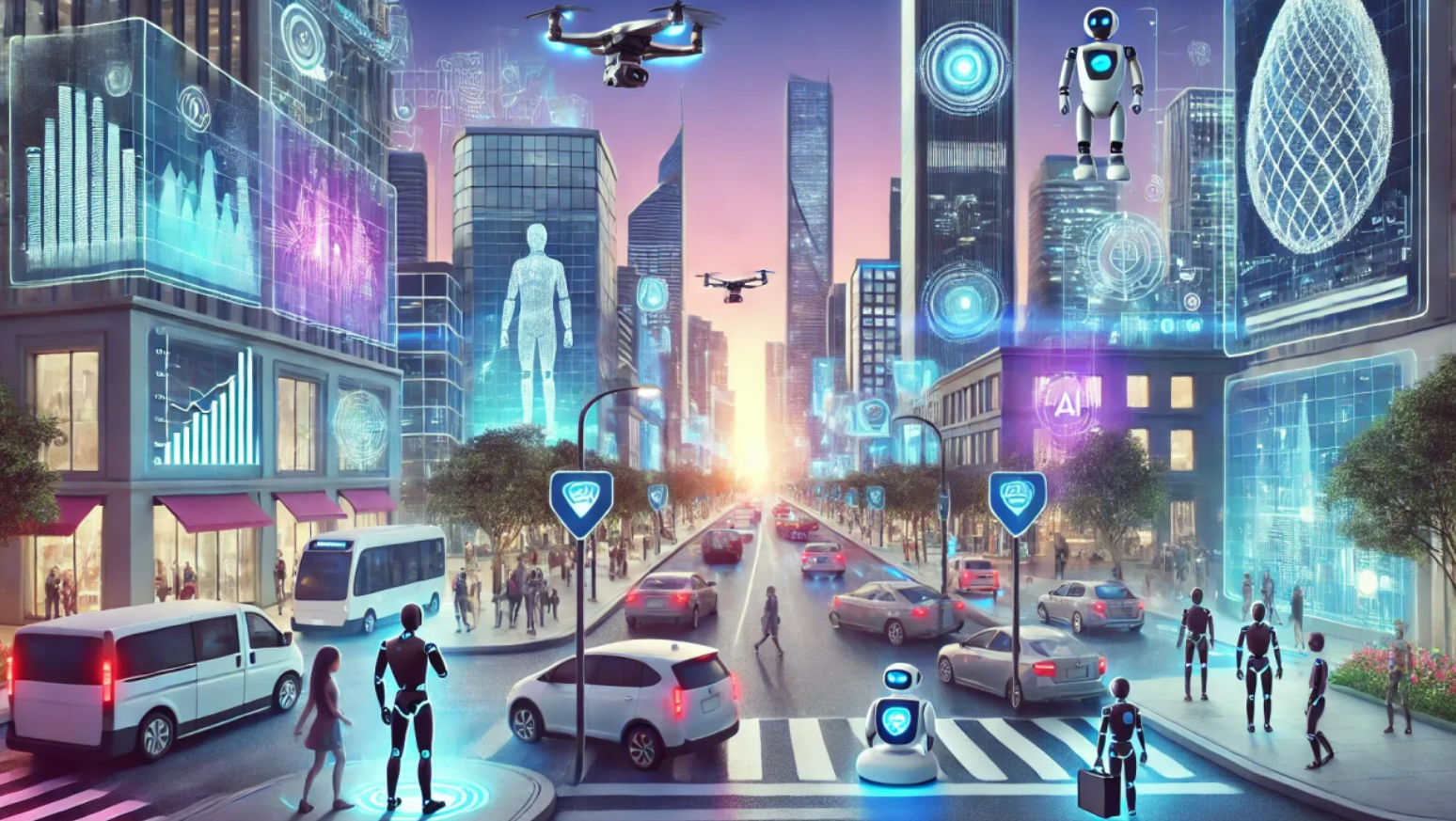
Artificial Intelligence, commonly known as AI, is no longer only a topic for scientists, engineers, or big technology companies. Today, AI is becoming a normal part of everyday life. From smartphones and online shopping to healthcare, education, transport, banking, and entertainment, AI is changing the way people live, work, learn, and communicate. Many people use AI every day without even realizing it. When a phone suggests the next word while typing, when YouTube recommends a video, or when Google Maps shows the fastest route, AI is working in the background.
AI means the ability of machines or computer systems to perform tasks that usually require human intelligence. These tasks may include learning, problem-solving, decision-making, understanding language, recognizing images, and predicting future actions. The main goal of AI is to make technology smarter, faster, and more helpful. In modern life, AI is not replacing humans completely, but it is making many daily activities easier and more efficient.
One of the biggest ways AI is changing everyday life is through smartphones. Smartphones have become personal assistants for many people. Voice assistants such as Siri, Google Assistant, and Alexa use AI to understand spoken language and respond to questions. People can ask about the weather, set alarms, send messages, play music, or search for information using only their voice. AI also helps improve phone cameras. Modern smartphones can automatically adjust brightness, focus, color, and background effects to produce better photos. Face recognition and fingerprint security also use AI-based systems to protect personal data.
AI has also changed online shopping. E-commerce platforms use AI to understand customer preferences. When someone searches for a product, AI suggests similar items based on browsing history, previous purchases, and popular trends. For example, if a person buys a mobile phone, the website may recommend phone covers, chargers, or headphones. This makes shopping more personalized and convenient. AI chatbots also help customers by answering questions, tracking orders, and solving simple problems quickly. As a result, businesses can serve customers faster, and customers can get support at any time.
Another major impact of AI is seen in social media. Platforms like Facebook, Instagram, TikTok, and YouTube use AI to decide what content appears on a user’s feed. AI studies what people like, share, watch, or comment on, and then recommends similar posts, videos, or advertisements. This makes social media more engaging and personalized. However, it also creates challenges. Sometimes people may only see content that matches their existing opinions, which can limit balanced thinking. AI can also spread misinformation if platforms do not control false or harmful content properly.
AI is also transforming education. Students now use AI tools to learn new topics, solve problems, improve writing, translate languages, and prepare assignments. Online learning platforms use AI to suggest lessons based on a student’s performance. If a student is weak in mathematics, the system can recommend more practice questions. AI can also help teachers by checking quizzes, preparing study materials, and identifying students who need extra support. This creates a more personalized learning experience. However, students must use AI responsibly. AI should support learning, not replace original thinking.
In healthcare, AI is making treatment faster and more accurate. Doctors use AI systems to analyze medical images, detect diseases, and predict health risks. AI can help identify cancer, heart problems, eye diseases, and other conditions at an early stage. It can also support hospitals in managing patient records and planning treatment. Health apps and smartwatches use AI to monitor heart rate, sleep patterns, steps, and physical activity. These tools help people become more aware of their health. Although AI is useful in healthcare, human doctors are still very important because medical decisions require experience, empathy, and ethical judgment.
AI is also changing transportation. Navigation apps such as Google Maps use AI to study traffic, accidents, road conditions, and travel time. These apps suggest the fastest route and help people avoid traffic jams. Ride-sharing services like Uber use AI to match drivers with passengers, calculate fares, and estimate arrival times. Self-driving cars are another example of AI in transport. These vehicles use sensors, cameras, and AI systems to understand roads and make driving decisions. Although fully self-driving cars are not common everywhere yet, AI is already improving road safety and transport efficiency.
Banking and finance have also been influenced by AI. Banks use AI to detect fraud and protect customers from suspicious transactions. If a card is used in an unusual way, the system may block the transaction or send an alert. AI also helps banks provide customer service through chatbots and mobile apps. In addition, AI can analyze financial behavior and suggest saving plans, investment options, or loan eligibility. This makes banking faster and more accessible. However, financial AI systems must be transparent and secure because they deal with sensitive personal information.
AI has made home life smarter as well. Smart home devices use AI to control lights, fans, air conditioners, security cameras, and home appliances. For example, a smart thermostat can learn when people are usually at home and adjust temperature automatically. Smart security cameras can detect movement and send alerts to homeowners. Robotic vacuum cleaners can clean floors by mapping rooms and avoiding obstacles. These technologies save time and improve comfort. In the future, smart homes may become even more common as AI becomes cheaper and easier to use.
Entertainment has also changed because of AI. Streaming platforms such as Netflix, Spotify, and YouTube use AI to recommend movies, songs, and videos based on user interests. AI is also used in video games to create smarter characters and realistic experiences. In music and film production, AI can help edit videos, generate background music, improve sound quality, and create visual effects. This allows creators to produce content faster. At the same time, AI-generated content raises questions about originality, copyright, and human creativity.
AI is also changing the workplace. Many companies use AI to automate repetitive tasks such as data entry, scheduling, customer support, and report generation. This allows employees to focus on more creative and strategic work. AI tools can help writers, designers, programmers, marketers, and researchers complete tasks more efficiently. For example, AI can draft emails, analyze data, create images, write code, and summarize documents. However, AI also creates fear about job loss. Some jobs may change or disappear, but new jobs will also be created in AI development, data analysis, cybersecurity, digital marketing, and technology management.
In agriculture, AI is helping farmers improve production. AI systems can study weather, soil conditions, crop health, and pest attacks. Drones and sensors can collect data from fields, and AI can analyze that data to suggest better farming decisions. Farmers can know when to water crops, use fertilizer, or take action against disease. This can reduce waste and increase food production. In countries where agriculture is important, AI can support food security and rural development.
AI is also connected to the Life Cycle of many products and services. From design and production to marketing, delivery, use, and recycling, AI can improve every stage. For example, companies can use AI to design better products, predict customer demand, reduce production waste, and improve supply chains. In environmental management, AI can help track pollution, manage energy use, and support recycling systems. This means AI is not only changing how people use products, but also how products are created, maintained, and improved throughout their complete Life Cycle.
Despite many benefits, AI also brings challenges. Privacy is one of the biggest concerns. AI systems often collect and analyze large amounts of personal data. If this data is misused, people’s privacy may be harmed. Another concern is bias. If AI is trained with unfair or incomplete data, it may make unfair decisions. For example, biased AI can affect job selection, loan approval, or law enforcement. There is also the risk of overdependence. If people rely too much on AI, they may lose critical thinking, creativity, and problem-solving skills.
To use AI properly, people need digital awareness and ethical responsibility. Governments, companies, schools, and individuals must work together to make AI safe, fair, and useful. AI should be designed to help humans, not control them. People should understand both the advantages and limitations of AI. Education systems should teach students how to use AI responsibly, protect privacy, and think critically about AI-generated information.
In conclusion, Artificial Intelligence is changing everyday life in many powerful ways. It is improving communication, education, healthcare, shopping, transport, banking, entertainment, home management, agriculture, and the workplace. AI saves time, increases efficiency, and creates personalized experiences. At the same time, it creates new challenges related to privacy, fairness, jobs, and human responsibility. The future of AI depends on how wisely people use it. If AI is used ethically and carefully, it can make everyday life easier, smarter, and more productive.

Related Posts